Far from being a slow and restful time, January marks the beginning of a new year, even in the garden or terrace. Winter still shrouds us but there are some important jobs to be done to enjoy our green space to its full potential in the months to come. With notebook, gloves and scarf, let’s get a better understanding of..
General maintenance
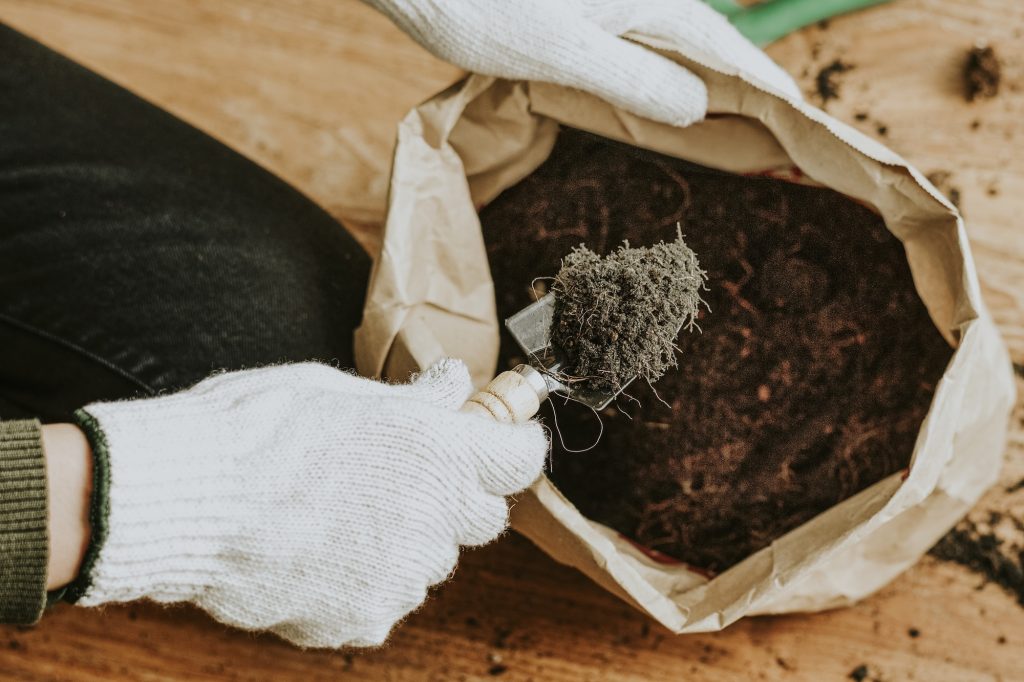
We check that climbing shrubs are firmly anchored to their supports with appropriate ties, preferably made of natural material, we also make sure that tree poles and supports have not been damaged by the weather, and we check that the winter protection with non-woven fabric still completely envelops the foliage.
If it has not already been done during the previous month, we distribute a layer of mulch at the foot of shrubs, trees and in herbaceous beds during dormant periods to protect the roots from the intense cold, but we avoid piling it on top of herbaceous perennials or compacting it against trees or shrubs. We fertilise hedges and distribute organic matter, which will play an important role as a soil conditioner for hedge species but also for lawns, shrubs and ornamental trees.
We keep flowerbeds and borders clean and, in the event of heavy snowfall, remove snow from conifers and hedges to prevent damage to branches. We check the bulbs and tubers we are storing, discarding those with signs of rot. We remove all plant residues left in the garden from the previous season, remembering not to compost any material with symptoms of phytopathologies such as downy mildew and rust.
We repair damaged wooden pergolas or fences and, during the sunniest days, treat them with a specific preservative.
We clean cisterns and water tanks in preparation for spring. Let’s do a general maintenance check on our garden tools such as lawnmowers: this is the best time to take them in for repair before the period of use begins, as well as to clean and sharpen shears, spades and hoes so that they are ready for use.
Indoor plants
The heating of our indoor spaces, whether homes or offices, can dry out the air, damaging indoor plants which need suitable humidity, so we spray them regularly with temperate, non-calcareous water. Let’s avoid over-watering the soil to prevent the dreaded water stagnation with subsequent root rot. Let us also place them away from cold draughts. For indoor species that need a lot of light, we can move them to a sunny windowsill to get as much light as possible during the short days typical of the winter period. We continue to remove the dust that tends to accumulate on the leaf blades by gently wiping them with a cloth moistened with water, and we always pay attention to the possible presence of parasites such as aphids, mealybugs and thrips by intervening with suitable specific products.
At the end of flowering we can repot our Phalaenopsis or ‘Moth Orchid’ if the substrate starts to deteriorate and/or if the roots have grown too much in relation to the pot and have come out of it.
Pruning
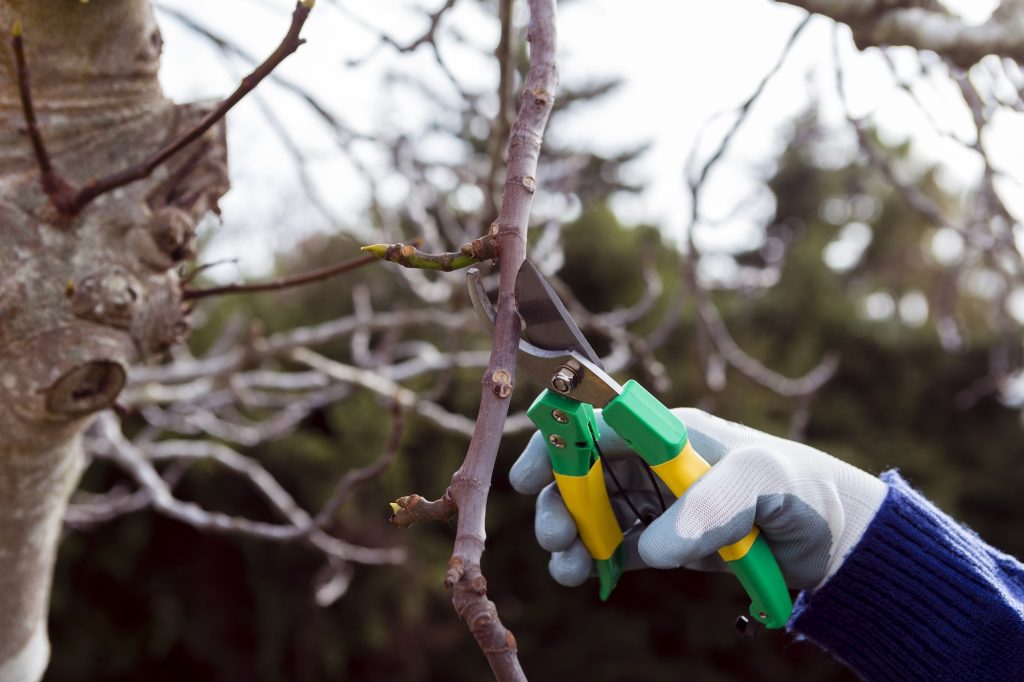
During this time of year it is possible to prune fruit trees such as apple and pear trees as they are in their dormant period, but we must remember to make a careful analysis beforehand of the cuts to be made, using tools that are proportionate to the size of the part to be pruned, with clean, sterilised blades; we must also remove any damaged parts of the plant such as old, dry branches or those with symptoms of phytopathology. This is also the time to prune small fruits such as currants and gooseberries in order to obtain future abundant production. We can also intervene with containment pruning on Hedera helix and Parthenocissus quinquefolia.
Lawn care
We correct any hollows and surface irregularities if the soil is not frozen. We manually weed out any weeds that may be present even during the colder season. Gently remove dry leaves from the turf with a rake and check for widespread yellowing due to nitrogen deficiency, in which case, if temperatures are not too cold, we can apply a foliar-absorbing NPK fertiliser for the lawn. On the other hand, the appearance of more localised spots can be caused by pathogenic fungi such as Microdochium nivale, Typhula incarnata and Typhula ishikariensis; in these cases we intervene by limiting the formation of felt and by treatments with specific phosphite-based products.
Planning: the gardener’s diary

January is a great time to take a scouting walk and take a critical look at our outdoor green space, an opportunity to make considered decisions about what we intend to change and plant in the coming year. We plan the work to be done in the vegetable garden from the comfort of our favourite armchair: with pencil and notebook we define the layout and set up an annual cultivation plan taking into consideration the application of crop rotation, also to prevent the spread of pests in the soil. We also plan new beds and borders, or modify existing ones with any other species or varieties to be transplanted in spring-summer.
Sowing and Transplanting
As long as the ground is not frozen or saturated with water, we can plant bare-root dormant species such as roses, fruit plants, shrubs and ornamental trees. Always remember to prepare the soil properly beforehand by making a hole of a suitable size with a shovel and spade, and then proceed with an even bottom fertilisation and, if possible, a liquid or granular mycorrhiza inoculum. It may be very useful to soak the roots in non-cold water before planting, we also place the plant in the hole with the collar out of the top soil level and afterwards we spread a layer of mulch on the surface. For proper post-transplantation settlement, we irrigate the soil with localised watering without saturating it. If we want to add an accent of colour to our outdoor spaces, how can we not choose shrubs such as Cornus sanguinea with its bright red young branches or Skimmia japonica whose female specimens display elegant orange-red berries, and let us also be surrounded by the intense scent of the flowering Sarcococca ruscifolia and Sarcococca confusa or Christmas Box.
For transplanting and sowing horticultural crops, if the climate permits and if the soil is in the ‘temperate’ stage, we can start by preparing the soil by digging and burying compost or manure. It is possible to proceed with the first sowing towards the end of January in a protected culture, such as seedbed or greenhouse, of species such as chard, lettuce and parsley.
And again
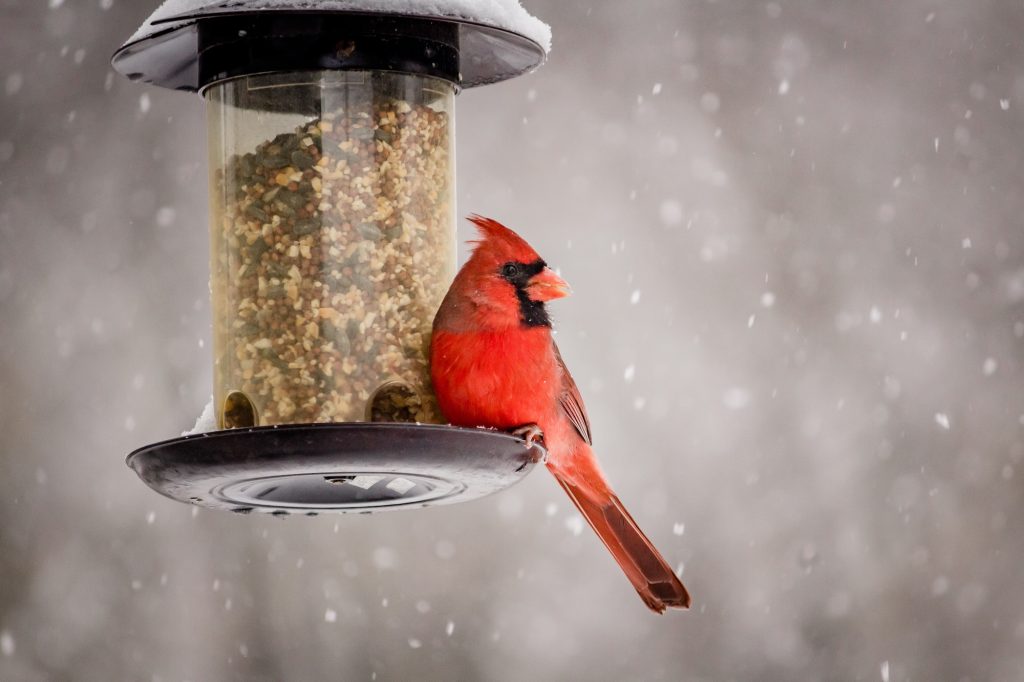
We still provide the birds with specific high-energy food and hang up fat pellets; we keep the feeders clean and full of seed mix to attract them, we also melt the deposited ice with lukewarm water on frosty days. We check the birdhouses to ensure that they are still firmly attached to the fence or wall and that they have not rotted away; if necessary we replace old or damaged ones.
We remove the old leaves of the hellebores or those with leaf spotting, but do not put them in the compost bin.
We remove any slippery layers of algae or similar from patios and paving.
We can write new labels for future sowing and transplanting. Furthermore, to bring the youngest members of the family closer to the world of nature, we could install a camera for wildlife that does not hibernate and visits our garden.
In January, let us prepare for a new year of growth with enthusiasm, aware and ready for the work ahead!