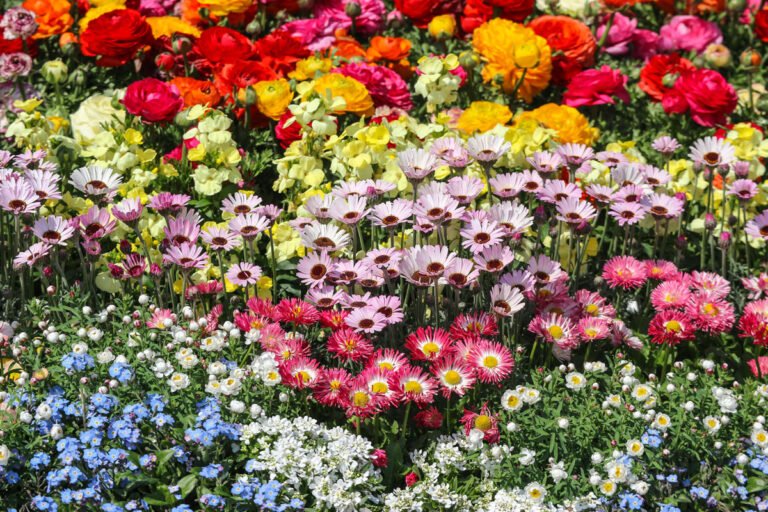
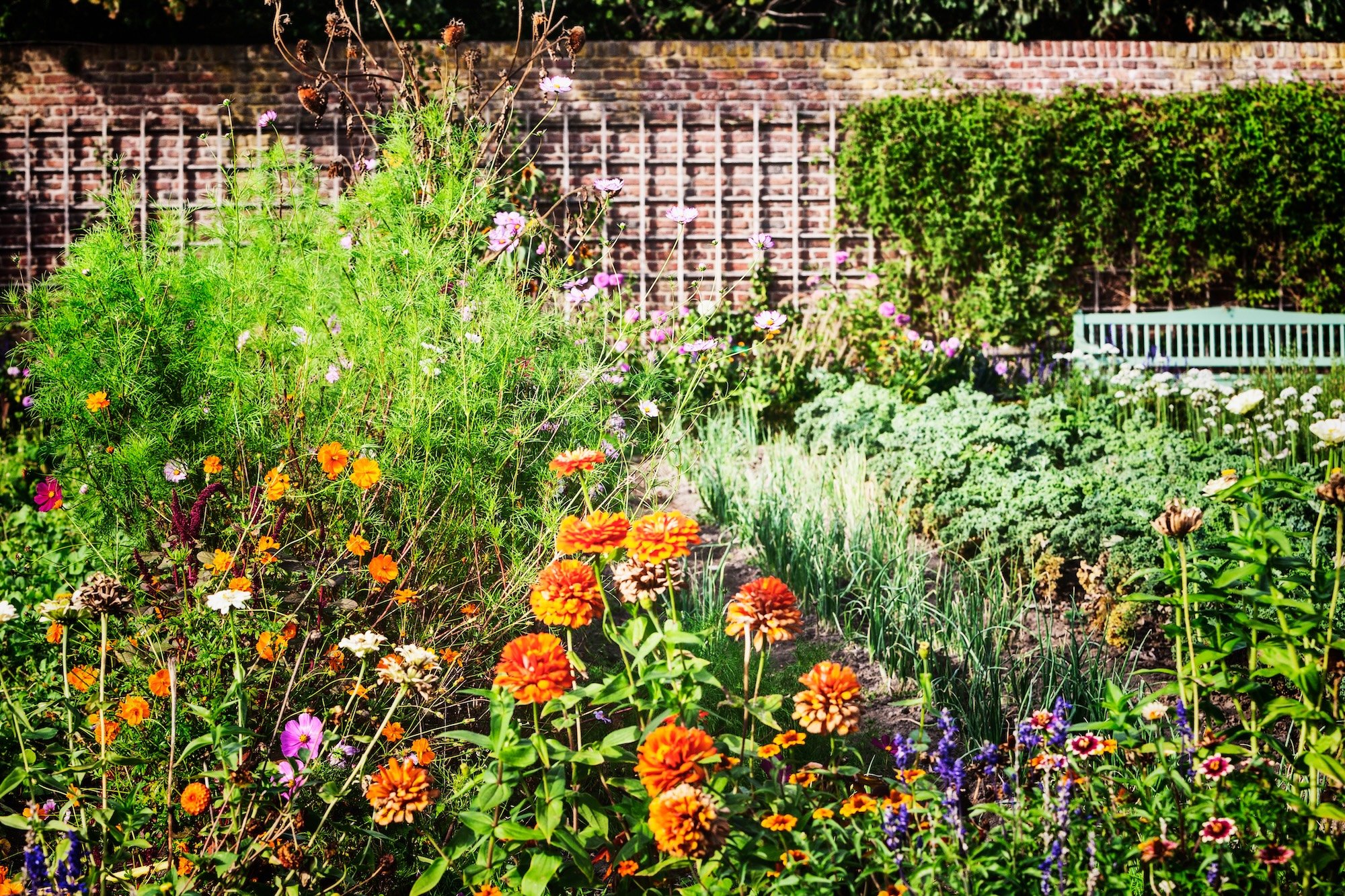
In June there are plenty of flowering herbaceous plants to plant alongside your vegetables in the garden, whether in the open ground or on balconies and terraces! They are beautiful, but that’s not all: if carefully chosen, these plants can bring numerous benefits through their blooms, attracting insects that aid pollination and thus helping to protect biodiversity, keeping harmful insects away from your vegetable crops and providing a home for beneficial predatory insects. What’s more, some of these species are even edible! Companion planting is a method for maintaining a natural balance within our vegetable gardens by growing mutually beneficial plants together, as certain combinations can promote pollination by attracting insects such as bees and butterflies, prevent fungal or bacterial diseases, keep pest levels low, and attract beneficial insects such as ladybirds, which are excellent aphid predators, thereby creating a more resilient ecosystem.
So let’s take a look at some of the best species to plant in June!
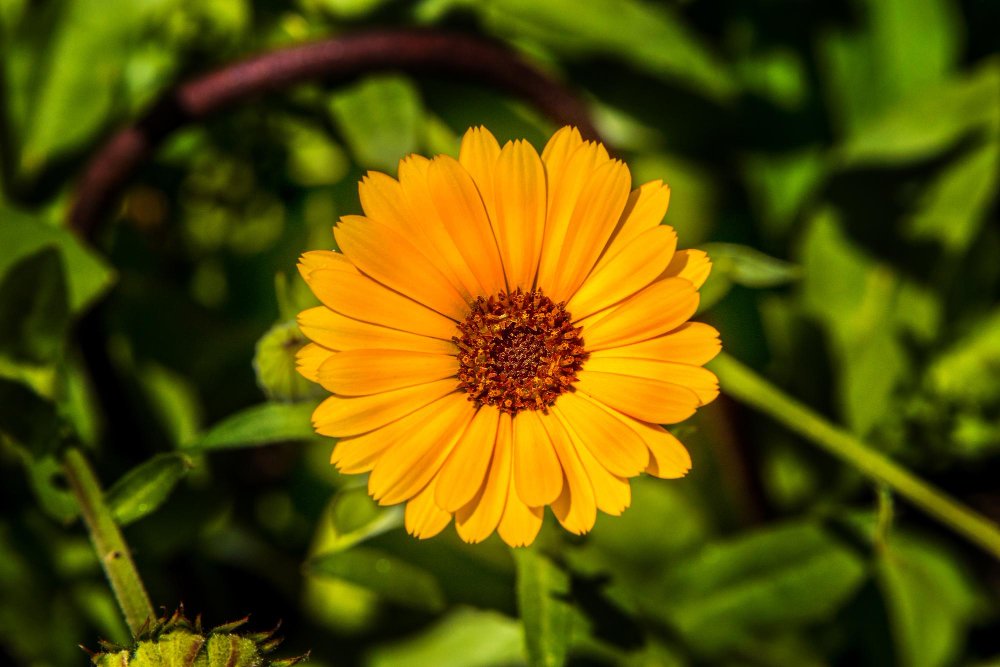
Calendula officinalis (Marigold)
With its brightly coloured flower heads and beneficial properties, marigold is often used with excellent results when intercropped with vegetable crops such as asparagus, carrots, courgettes, cucumbers and tomatoes.
Furthermore, marigold, whose roots release biochemical substances into the soil, is recommended for repelling parasitic nematodes present in the soil which, from spring onwards with average temperatures of 20°C, can damage the root systems of many vegetable crops, leading to a slowdown or halt in their growth.
Calendula flowers are also edible, widely used in many dishes and excellent for infusions and herbal teas!
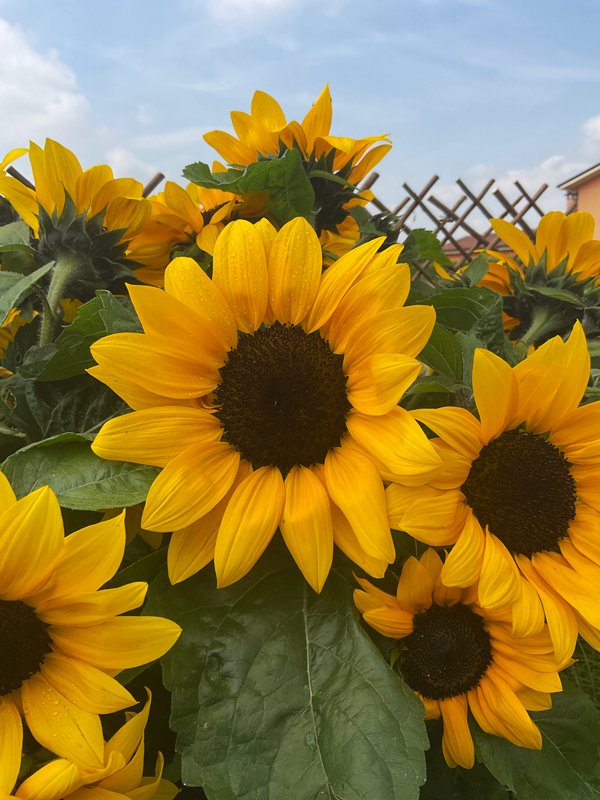
Helianthus annuus (Sunflower)
Loved for its flower heads with a central disc surrounded by ray florets in vibrant, bright colours, it can become a star attraction in our vegetable garden, adding ornamental value whilst also attracting bees, ladybirds and butterflies. Suitable for companion planting with cucumber, pumpkin, courgette and beans.
The roasted seeds of some varieties are also edible.
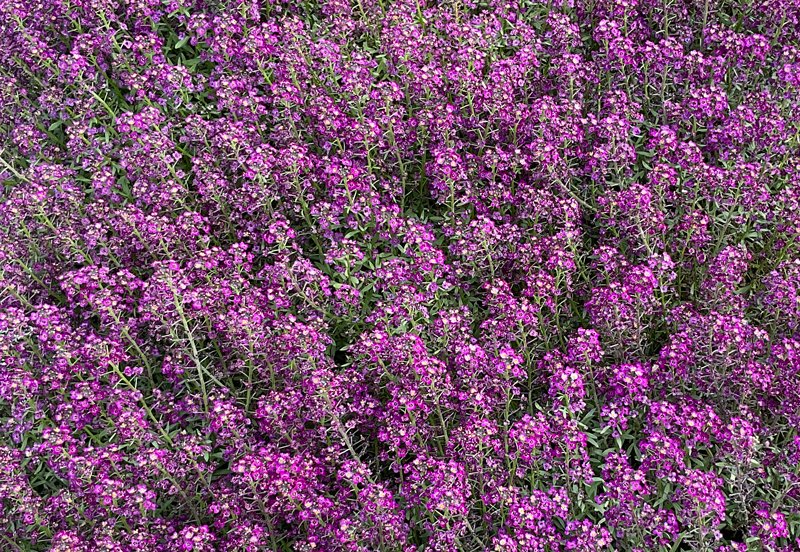
Lobularia maritima (Sea Pansy)
An ornamental herb with a compact growth habit and profuse, long-lasting flowers, which is also very popular with pollinating insects such as bees and butterflies. It also attracts ground-dwelling beetles belonging to the Carabidae family, which prey on numerous harmful insects. Recommended for intercropping with cabbages, broccoli, aubergines and tomatoes.
The flowers and young leaves are also mainly used raw in cooking to give a unique flavour to salads or cheeses!
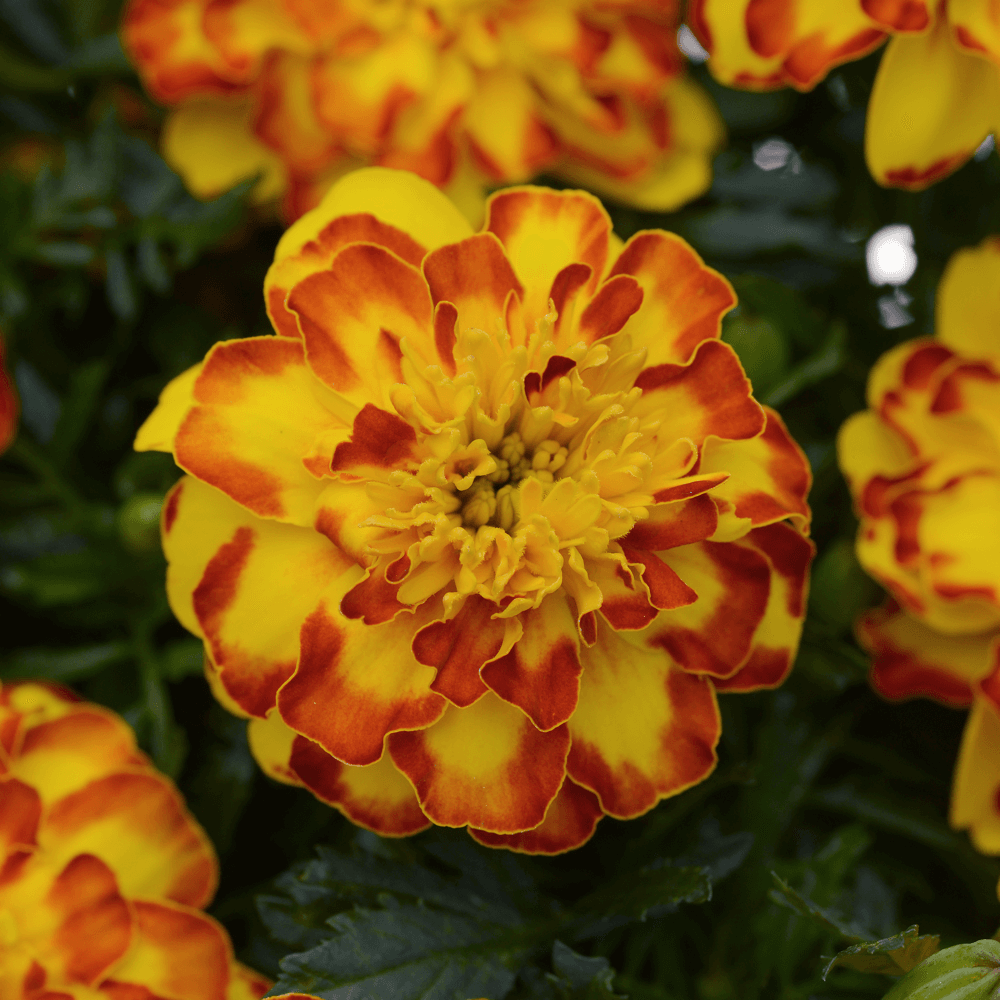
Tagetes patula (French Marigold)
A herbaceous plant with showy flowers that bloom throughout the summer until early autumn, displaying bright, vibrant flower heads that are highly attractive to pollinating insects such as bees and butterflies.
It also attracts ladybirds and lacewings, which feed on aphids. It is also useful for repelling whiteflies and cabbage white butterflies, whilst the roots can act as a repellent against nematodes in the soil.
It is often grown as a ‘decoy plant’ to attract the dreaded slugs, which are very fond of it, though care must be taken to use barriers or natural traps. Suitable for companion planting with basil, cabbages, courgettes, peppers and tomatoes.
The fresh petals are edible and are enjoyed in salads, risotto and desserts.
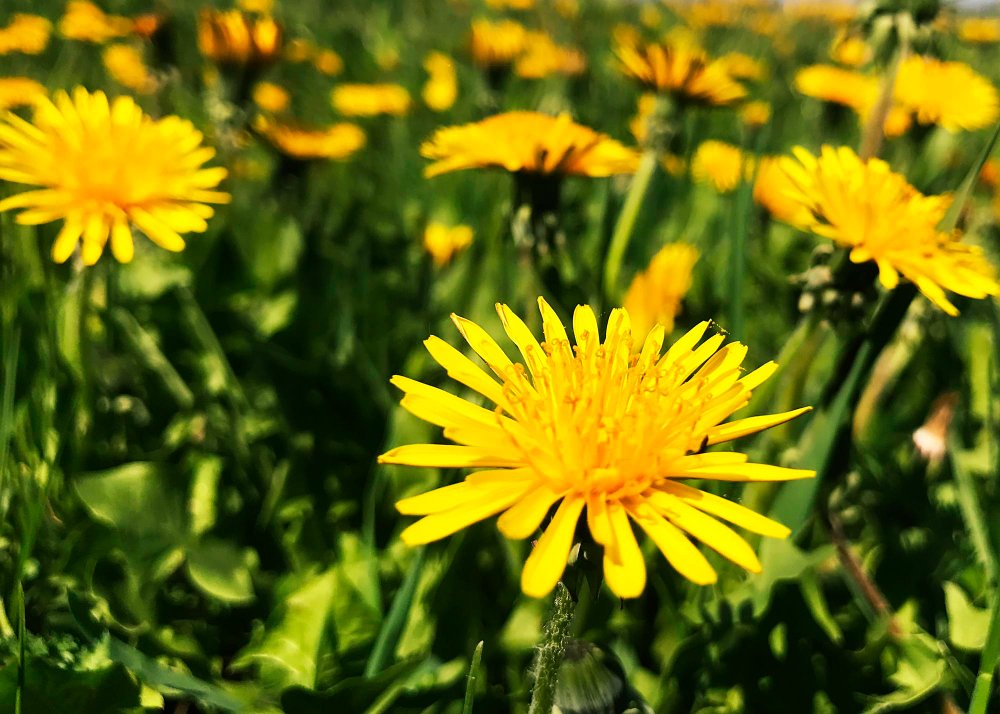
Taraxacum officinale (Dandelion)
Known as “Dandelion” due to its serrated leaf margins, it is a perennial herb that often grows wild in uncultivated fields, where it spreads very easily via its seeds contained in the characteristic “blowball” that children love so much, but which adults also enjoy blowing on! It can be grown both in open ground and in pots as it does not grow too tall; it requires a sunny spot and regular watering.
It flowers in spring and summer, attracting bees—which are essential for pollination and honey production—and ladybirds, which prey on aphids, insects which, with their piercing-sucking mouthparts, feed on the sap of our vegetable crops, weakening them.
It also has a deep, taproot system that helps keep the soil less compact, improving drainage and aeration.
Dandelion also holds a place of honour in the kitchen: the raw leaves are used in salads or cooked for delicious starters, the flowers for omelettes and sauces, whilst the buds can be pickled in vinegar or preserved in oil. Even the roots are used for decoctions and herbal teas!
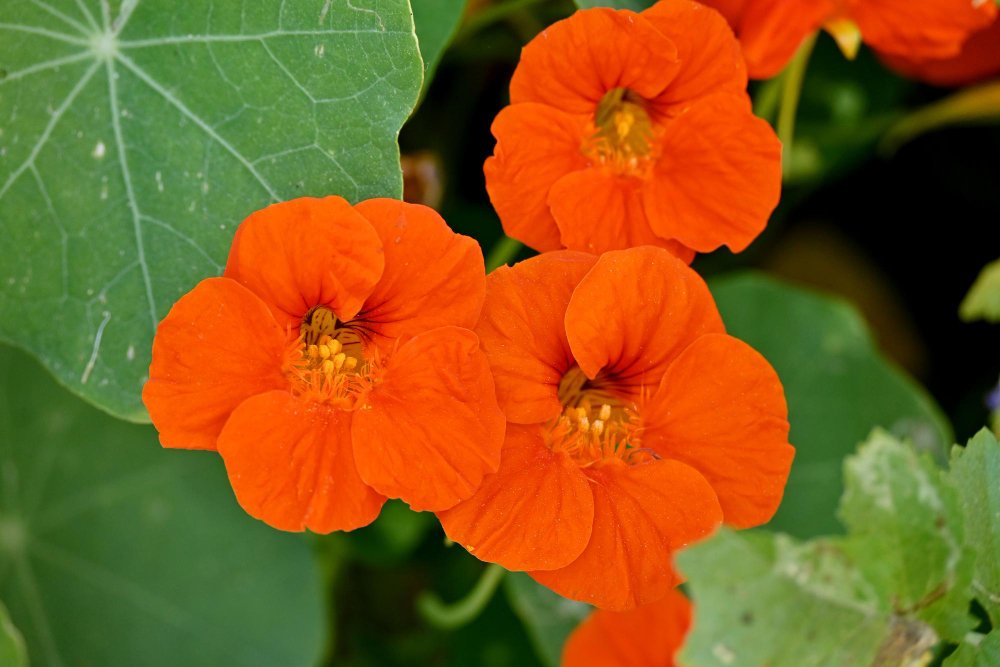
Tropaeolum majus (Nasturtium)
A perennial herbaceous plant, though mainly grown as an annual depending on local climate conditions, with a compact or ground-covering habit depending on the variety. Flowering continues throughout the summer with a profusion of brightly coloured flowers, attracting pollinating insects. Furthermore, when intercropped with brassicas such as broccoli and cabbages, it can keep aphids, flea beetles and cabbage white butterflies as a ‘trap plant’. When planted near courgettes and pumpkins, it can encourage pollination by bees. It is also useful when when grown alongside tomato plants.
Rich in vitamin C, its rounded leaves which give off a slight fragrance when rubbed, its flowers and even its seeds add a fresh and delicately spicy touch to a variety of dishes such as starters, soups, salads or pasta dishes.
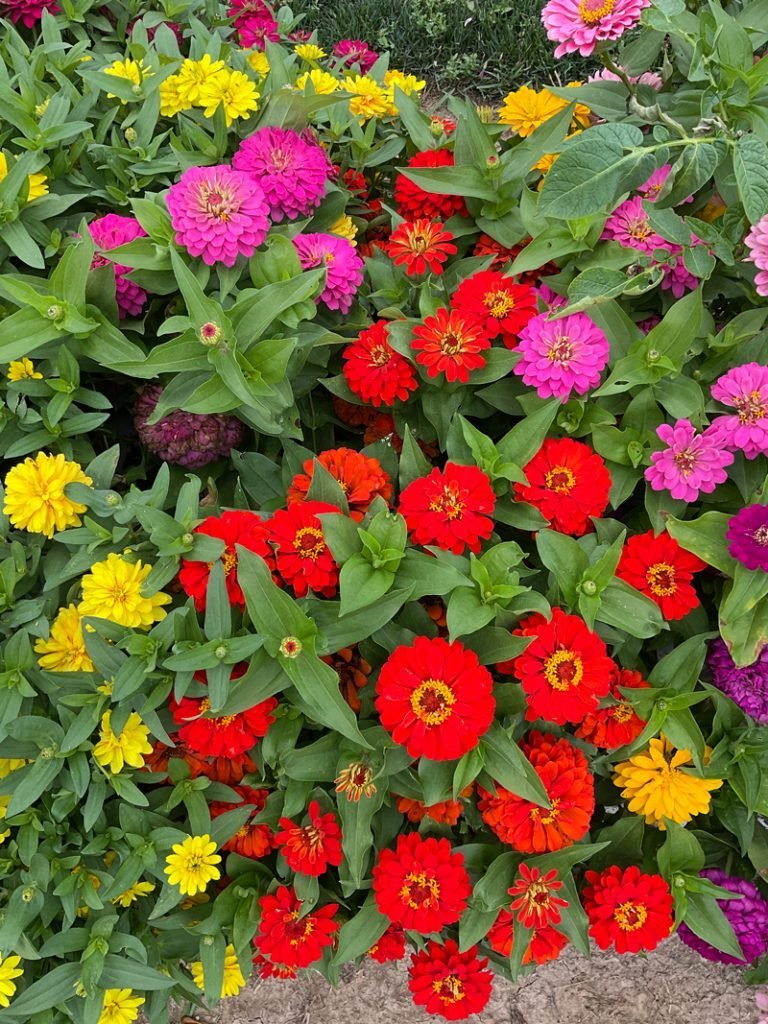
Zinnia spp
Loved as an ornamental herbaceous plant for its daisy-like flowers clustered in the typical capitulum inflorescence with petals in warm, vibrant shades, in a wide range of colours depending on the variety.
Easy to grow, it requires a sunny spot and is resistant to summer heat as well as adverse weather conditions such as hail, rain and wind. In our vegetable garden, as well as adding a splash of colour and uniqueness, it will help attract pollinating insects—such as butterflies—during its flowering period, which lasts from June until early autumn, thereby helping to safeguard biodiversity.
There are also aromatic species that you can grow in companion planting in the vegetable garden, such as Matricaria chamomilla (chamomile), Salvia officinalis (sage), Salvia rosmarinus (rosemary), Satureja montana (savory) and Thymus (thyme).
Intercropping can bring many benefits in terms of plant growth, flowering and consequently final yield. However, the choice of plant species must be made with care, as not all benefit from being grown alongside others. Furthermore, for edible species, we must always ensure they are grown without the use of chemicals, and take into account any specific intolerances or allergies.