With the current climate characterized by increasingly hot and dry summers and diminishing water reserves, it is also necessary to select plant species suitable for decorating our balconies and gardens that are resistant to drought, ensuring less use of an important natural resource: water.
Even a simple gesture like carefully selecting suitable plants can help reduce water consumption, as well as time if watering manually, while still achieving a highly ornamental result in planters and pots, as well as flowerbeds and borders. This is true even in urban settings, based on the Minimum Environmental Criteria, the environmental requirements defined in the “Plan for the Environmental Sustainability of Consumption in the Public Administration Sector,” which also aims to improve the efficiency of public greenery management.
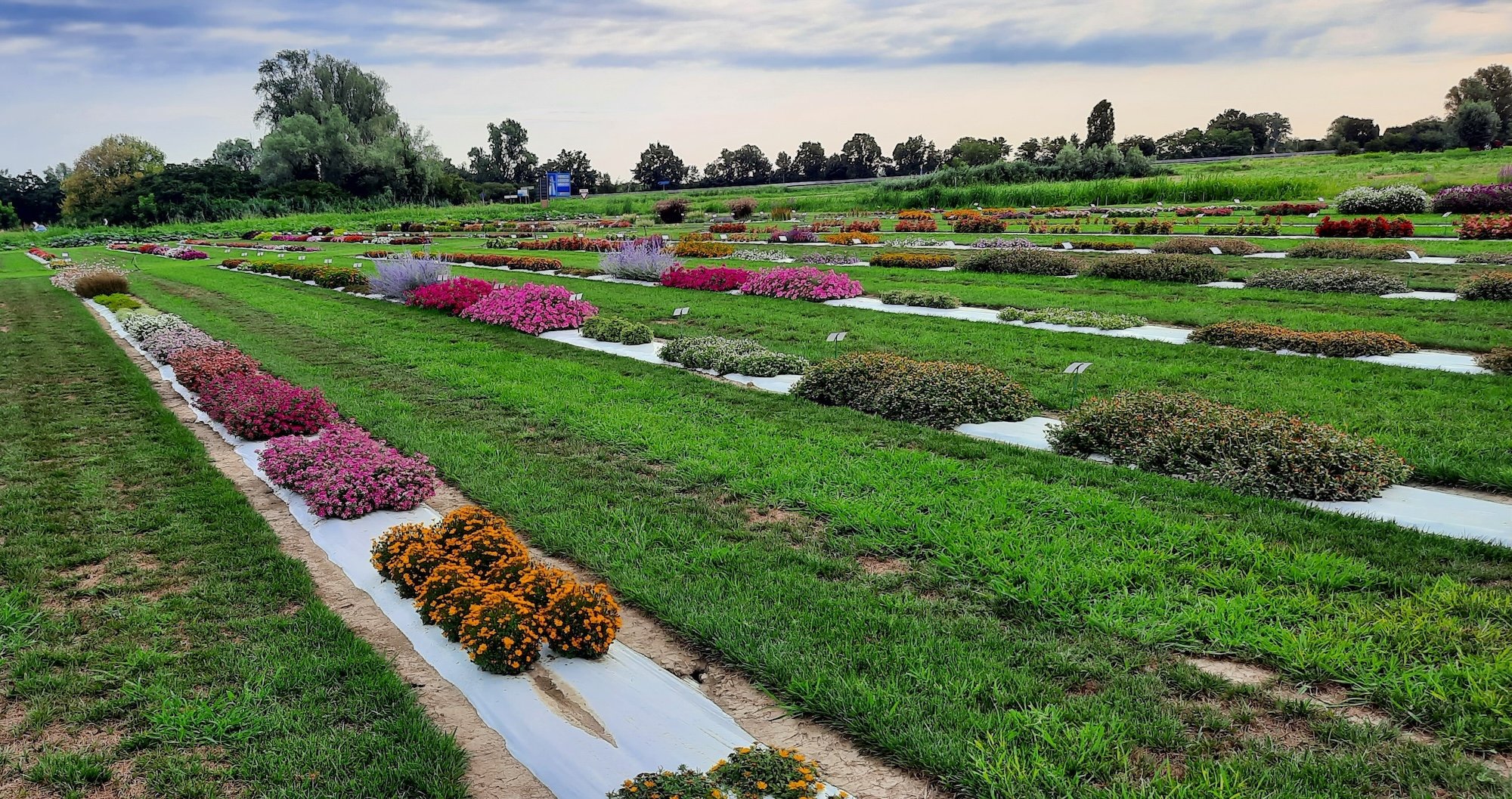
An interesting trial conducted at the Padana Group’s “Varietal Trial Field” in Legnago (Verona) allowed us to compare species and varieties in terms of their tolerance to heat and water scarcity. From an initial careful observation in the mulched beds, we can draw the following conclusions regarding the species and/or varieties that responded best to water stress.
Angelonia angustifolia
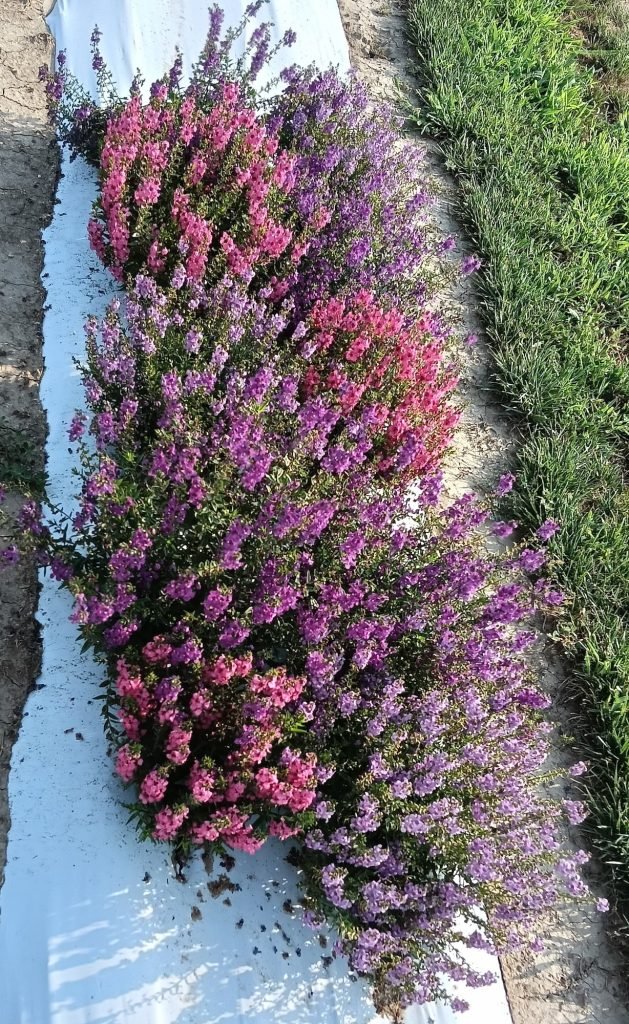
An ornamental herbaceous plant with an upright habit and compact growth. Known and appreciated by plant enthusiasts, gardeners, landscapers, and professional growers for its long, continuous flowering period, which extends from late spring through late summer/early autumn. It features a profusion of small, lion-like flowers clustered in highly aesthetically pleasing spike-shaped inflorescences with varying color tones depending on the variety. They are well-loved by beneficial insects such as bees and butterflies, thus helping to preserve and enhance biodiversity in their locations. The SERENA® MIX F1 color mix stands out for its resistance to heat and drought in the absence of irrigation, demonstrating full vegetative development and a dense, vividly colored bloom.
Catharanthus roseus
Ornamental herbaceous plant grown mainly as an annual, with an erect or drooping habit depending on the variety.
It quickly creates dense canopies of foliage from which elegant flowers emerge in a wide range of colours. These flowers bloom profusely and protractedly from late spring to early autumn, lending a vivid and scenic accent to gardens as well as balconies and terraces.
In particular, the Soirée series stood out, whose varieties have smaller leaves than traditional periwinkles to reduce water loss, making them more resilient and resistant to summer drought, guaranteeing full and lush flowering without wilting even at high temperatures.
Celosia argentea serie Flamma
The varieties in the Celosia Flamma series exhibit vigorous growth with a rounder habit than others. They have proven to be very tolerant of heat and drought, while still displaying full bloom with showy, eye-catching plume-shaped inflorescences whose colors remain vibrant without fading or lightening.
Gaura lindheimeri
An ornamental perennial plant prized by gardeners, landscapers, and plant enthusiasts of all levels for its spectacular flowering, which extends from spring to mid-autumn with a profusion of graceful, star- or butterfly-shaped flowers that create voluminous, colorful masses with an elegant final effect. Suitable for flowerbeds, borders, and roundabouts, as well as for balconies and terraces in planters and pots. The Compact series, more compact and with abundant flowers, has demonstrated high resistance to heat and drought while maintaining adequate canopy development and full flowering.
Gomphrena globosa
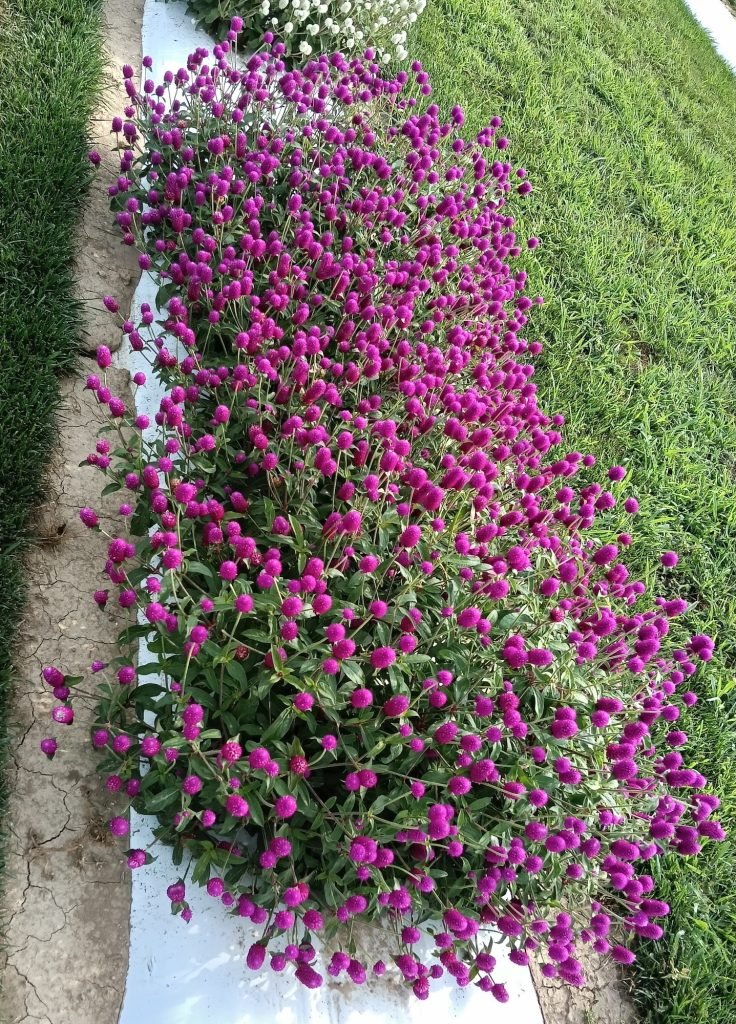
A vigorous, fast-growing, upright annual ornamental herbaceous plant. Prized in landscape design for its distinctive flower heads that rise above the foliage and are well-liked by pollinating insects, thus helping to preserve local biodiversity. Easy to grow, it is heat-resistant, making it ideal for flowerbeds, borders, and roundabouts to create perspective views, as well as in planters or tubs to add elegance and sensory movement to balconies and terraces. The “PING PONG” variety in particular has shown remarkable drought resistance, resulting in a more compact and short plant, as its height depends on water availability, and ensuring a full, dense, and lush bloom.
Lantana camara
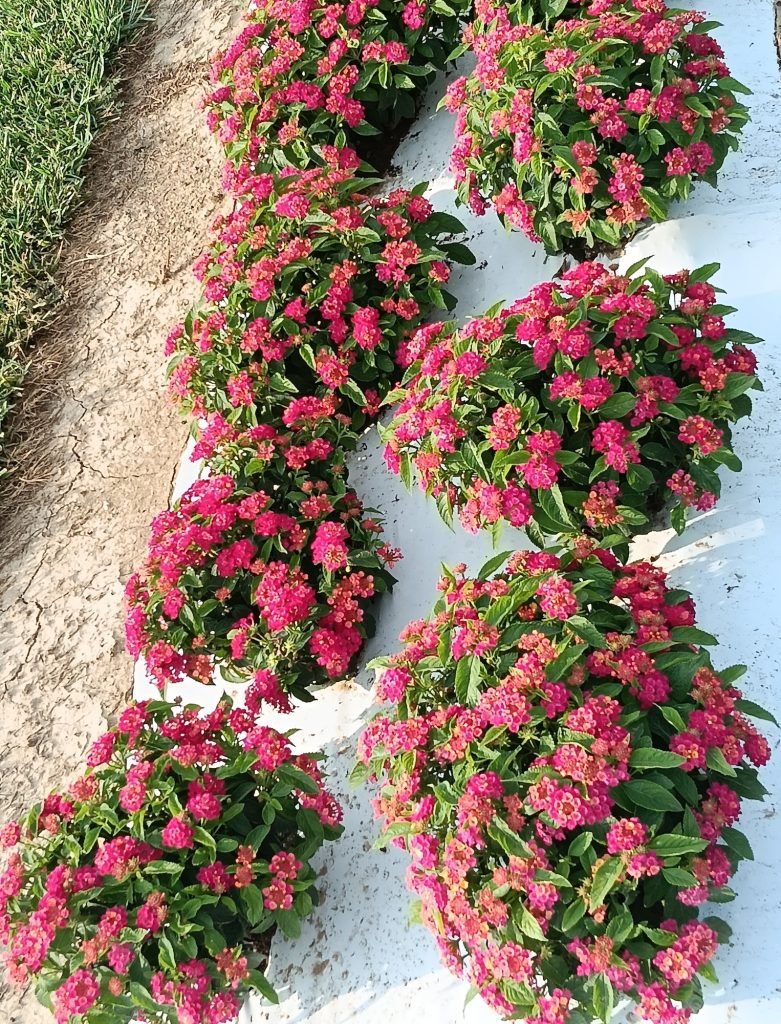
An ornamental plant with a compact, globular habit. Often grown as an annual, it can also function as a perennial shrub in temperate Mediterranean climates. Very hardy, vigorous, and easy to manage, it is suitable for flowerbeds, including traffic islands, where it tolerates sunny locations well and adapts well to the dry, hot summers. The abundant, fragrant flowering, beloved by butterflies and other beneficial insects, lasts from early spring until midsummer with a profusion of warm, vibrant flowers, either multicolored or monochromatic. The Lantastic series has shown greater tolerance to full sun in flowerbeds even without irrigation, that is, subjecting it to water stress. Under these conditions, it developed denser, fuller blooms than irrigated comparison plants of the same variety.
Petunia Surfinia Sumo Rose
This Surfinia variety has an upright habit and larger flowers. Its fast growth and groundcover habit make it ideal for creating dense beds dotted with a profusion of colorful flowers with bell-shaped corollas, making it a highly attractive addition to any landscape. Non-irrigated specimens have shown optimal vegetative growth and full blooms with vivid, intense hues.
Perovskia atriplicifolia
An upright ornamental perennial, prized for its silvery foliage and its continuous blooms from late spring to early fall, with flowers borne in spike-like inflorescences in purplish-blue hues. It performs excellently in flowerbeds without irrigation, ensuring full bloom.
Portulaca grandiflora
A highly decorative annual herbaceous plant, vigorous and with a drooping or semi-erect growth habit, depending on the variety. With its abundant blooms and vibrant, vibrant colors even in hot, dry conditions, it perfectly expresses the strength and vivacity of summer, making it the ideal solution for adding a splash of color to full-sun spaces, including flowerbeds, borders, balconies, and terraces. It is also suitable for hanging baskets and rock gardens. The succulent, needle-like foliage lends a decorative touch, creating dense canopies from which, from mid-spring to early autumn, a profusion of flowers emerge, which tend to close their corollas at sunset. The Kokorita series is distinguished by its high hardiness, resistance to heat, drought, and adverse weather, as well as its low maintenance, low water consumption, and full blooms with vibrant colors that remain in full sun.