May is the perfect month for transplanting spring-summer vegetable crops. Now that the risk of even late frosts has passed we can start planting out, perhaps with a little help from the youngest members of the family, numerous seedlings that will reward us with their produce in the coming months.
Remember that the first step towards healthy plants and, consequently, an excellent final yield is proper soil preparation: if not already done, dig to a depth of 20/30 cm, removing any weeds, large stones and residues from previous crops; then work organic or chemical fertiliser evenly into the soil and, using a spade, break up the denser, coarser clods to improve fertiliser distribution and achieve a looser texture. To encourage the drainage of excess water, thereby preventing harmful waterlogging, create a raised bed by slightly mounding the soil and finally use a rake to carefully level the surface.
During cultivation, it is important to promptly remove any weeds within the planting area by hoeing; alternatively, you can control them from the outset by using a mulch sheet.
But now let’s take a look together at which species can be transplanted this month.
Courgette (Cucurbita pepo)
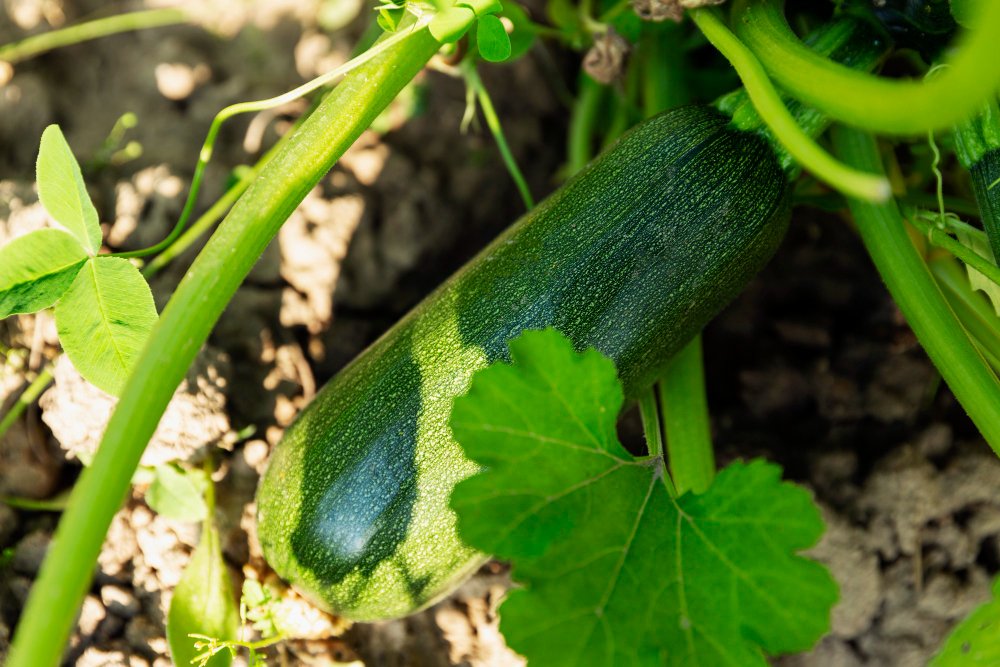
An annual herbaceous plant belonging, along with watermelon, melon and pumpkin, to the botanical family Cucurbitaceae. Valued for its fruit, which varies in shape and colour depending on the variety, and is used in cooking for its delicate flavour. Easy to grow, it requires well-drained soil rich in organic matter, as well as a sunny position.
When transplanting, correct spacing is of primary importance to allow for proper vegetative growth followed by a high yield; to this end, an average density of 2 plants per square metre is recommended, also taking into account the plant’s mature habit. When planting, carefully remove the seedling from the container without damaging the roots, place it in a raised bed with the collar above the soil surface, and water immediately afterwards. The water requirements of the courgette plant are particularly high, especially during the summer. Use rainwater, or alternatively tap water with an optimal sub-acidic pH, either manually or via an irrigation system. When transplanting, we support the seedling – which may be more sensitive to stress in its new location – by providing an initial generous watering without causing waterlogging, followed by regular watering to keep the soil consistently moist but not waterlogged, thus preventing root rot. It is also advisable not to water the above-ground part of the plant from above in the late afternoon or evening to prevent the spread of plant diseases.
Cucumber (Cucumis sativus)
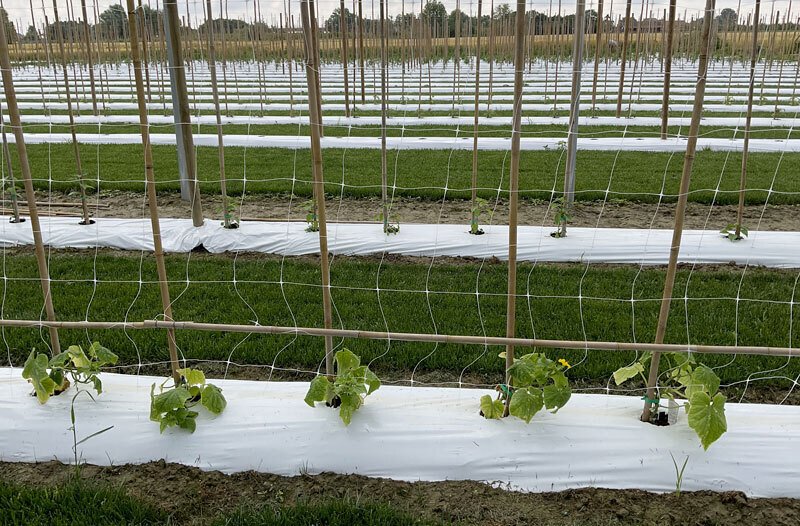
An annual herbaceous species, used in the food industry for its fruit, known as pepo, with its characteristic elongated shape and refreshing taste. Also belonging to the Cucurbitaceae family, like courgettes, it has a trailing habit or, when supported, climbs using its characteristic tendrils. The yellow flowers appear in late spring or early summer, attracting pollinating insects such as bees and bumblebees. Moderately hardy, it requires sunny, sheltered locations in well-drained soil with a pH between 5.8 and 6.2. We transplant, using an average density of 2 or 3 seedlings per square metre, once the temperature has stabilised above the biological minimum (10/12°C); when the cotyledons begin to turn yellow, it is time to transplant. Use young seedlings with a maximum of 4 or 5 true leaves and roots that have completely enveloped the root ball, appearing light in colour, white and free from necrosis. Transplanting should be carried out in a raised bed, at least 15/20 cm high, leaving the root ball protruding above the soil by at least 3/5 mm. Immediately after transplanting, insert the chosen stake about 10 cm from the plant, to a depth of about 20 cm, taking care not to damage the roots.
If you wish to use a drip irrigation system, remember to position it at least 10/15 cm from the base of the seedlings. If, on the other hand, you opt for manual watering, remember not to water the seedlings from above in the late afternoon or evening to prevent the spread of plant diseases.
Tomato (Solanum lycopersicum)
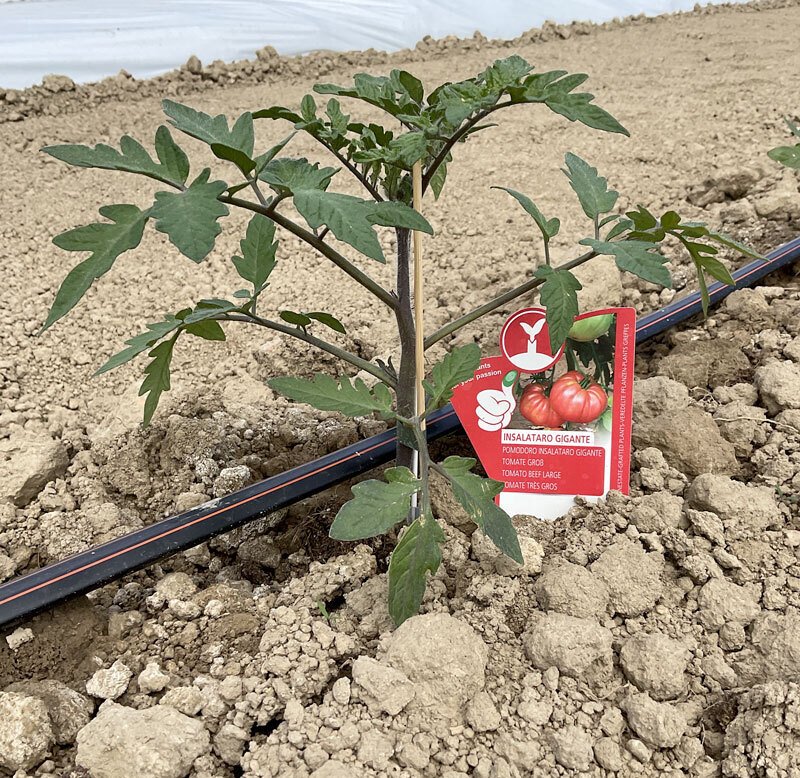
An annual herbaceous plant native to Central and South America, it is now one of the most well-known and widespread crops of significant economic importance in horticulture, both for fresh consumption and for the production of preserves, sauces, pizzas, and fresh or frozen preparations, depending on the variety. It adapts to various soil types but prefers loose or very well-structured soils.
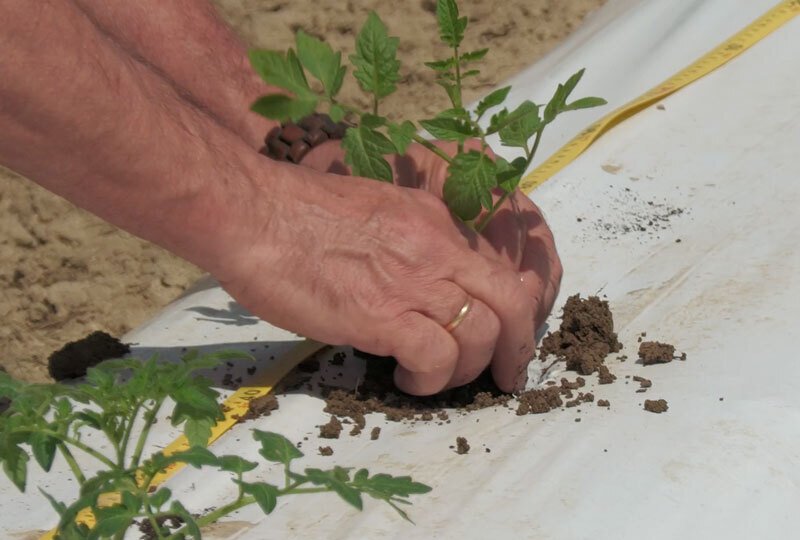
Transplant the seedlings into a raised bed, mounded and raised by at least 15/20 cm, once the temperature has stabilised above the minimum biological temperature (10/12°C), always using young seedlings, preferably with no more than 4 or 5 true leaves, and with light-coloured, non-necrotic roots. The seedling’s collar and root ball should be left above ground by at least 2/5 mm. We water the soil before transplanting and subsequently water without overdoing it, thus preventing waterlogging and root rot. Place the stake before transplanting or, if necessary, before the first flower cluster begins to bloom, tying the stem to the stake promptly and regularly, especially during periods of rapid plant growth. Great care must be taken when using different complete fertilisers in relation to the stages of development: with a higher proportion of phosphorus during the rooting and flowering stages, a higher proportion of nitrogen during the vegetative growth stage, and a higher proportion of potassium during the fruit formation and harvesting stages.
Aubergine (Solanum melongena)
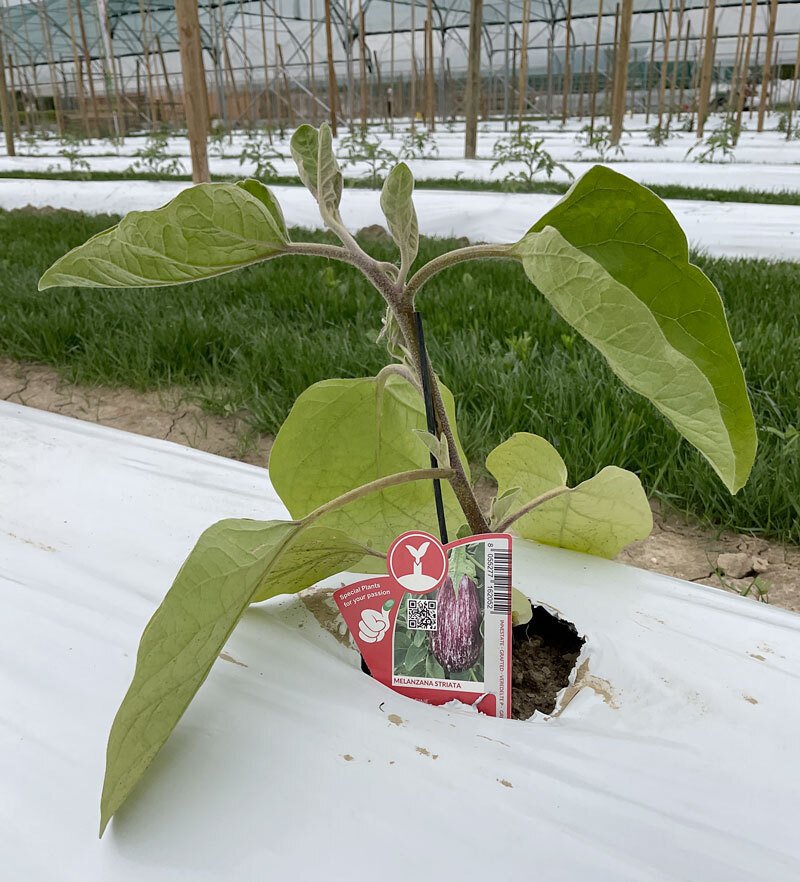
A vegetable plant belonging, along with the tomato, potato and pepper, to the Solanaceae family; used for food due to its fruits, which are cooked and used in a wide variety of traditional recipes across many regions of the world. Grown as an annual, both in open fields and in pots, it requires a warm but not dry climate. Easy to grow, it is now available in a wide range of varieties that differ in the size, shape and texture of the fruit (berries).
For transplanting, choose a plot of land that has not hosted the same species for at least 4/5 years and, above all, where the last aubergine crop showed no symptoms of Verticillium spp.
Planting should be carried out when the temperature has stabilised above the biological minimum (10°C), always using young seedlings with a maximum of 4 or 5 true leaves and roots that are not dark or necrotic.
Transplanting should be carried out in a raised bed with a ridge at least 15/20 cm high; the root ball should be kept at least 3/5 mm above the soil surface.
If using a drip line or perforated hose, this irrigation system must be positioned at least 10/15 cm away from the seedling’s collar. Remember also to loosen the top few centimetres of soil, if not mulched, to prevent a surface crust from forming and to remove any weeds at the same time.
Pepper (Capsicum annuum)
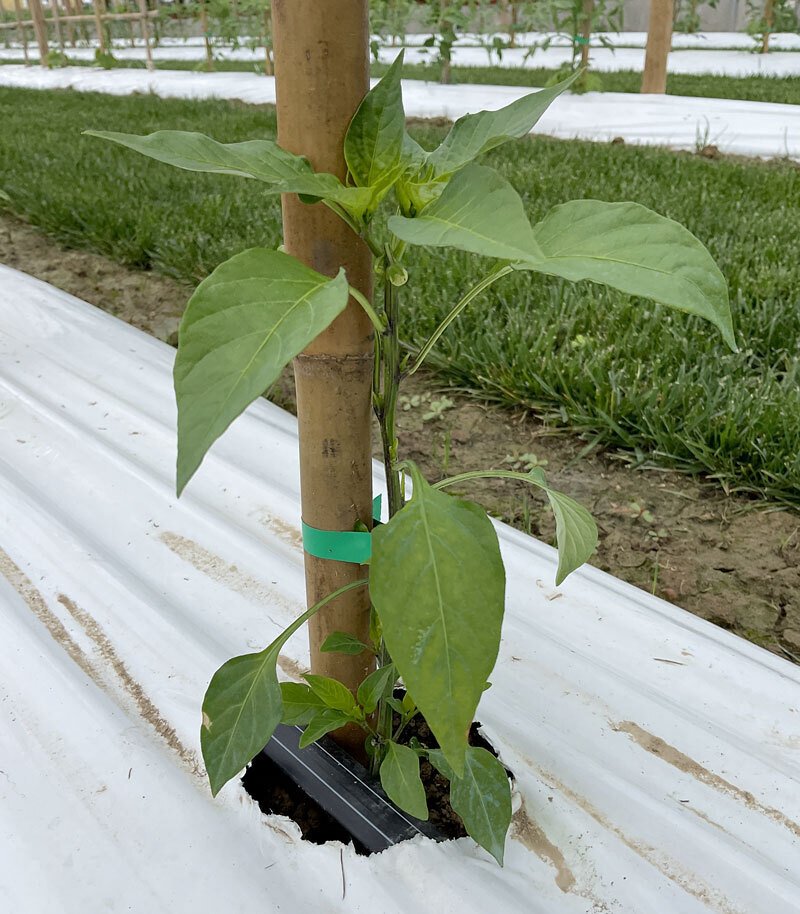
Belonging to the Capsicum genus, it is grown both in beds and in large pots for its fruits, known as berries, which have an unmistakable flavour and vary in shape, colour and heat depending on the variety.
Transplant young plants with a maximum of 4 or 5 true leaves and light-coloured roots into a raised (15/20 cm) and banked bed, leaving the root ball slightly above the surface (2/5 mm). Positioning the stake before transplanting is ideal to avoid damaging the roots, as often happens in later stages; furthermore, staking will effectively prevent the plant from lodging, caused by fruit set and growth.
Water immediately after planting and, in the following days, if conditions require it, continue to water but never excessively to avoid root asphyxia.
Watering should be carried out in the morning and not in the late afternoon or evening to allow the leaves to dry before nightfall.
We carry out frequent fertigation at low doses to avoid excessively high salinity levels, which would compromise the plant’s development.
Celery (Apium graveolens)
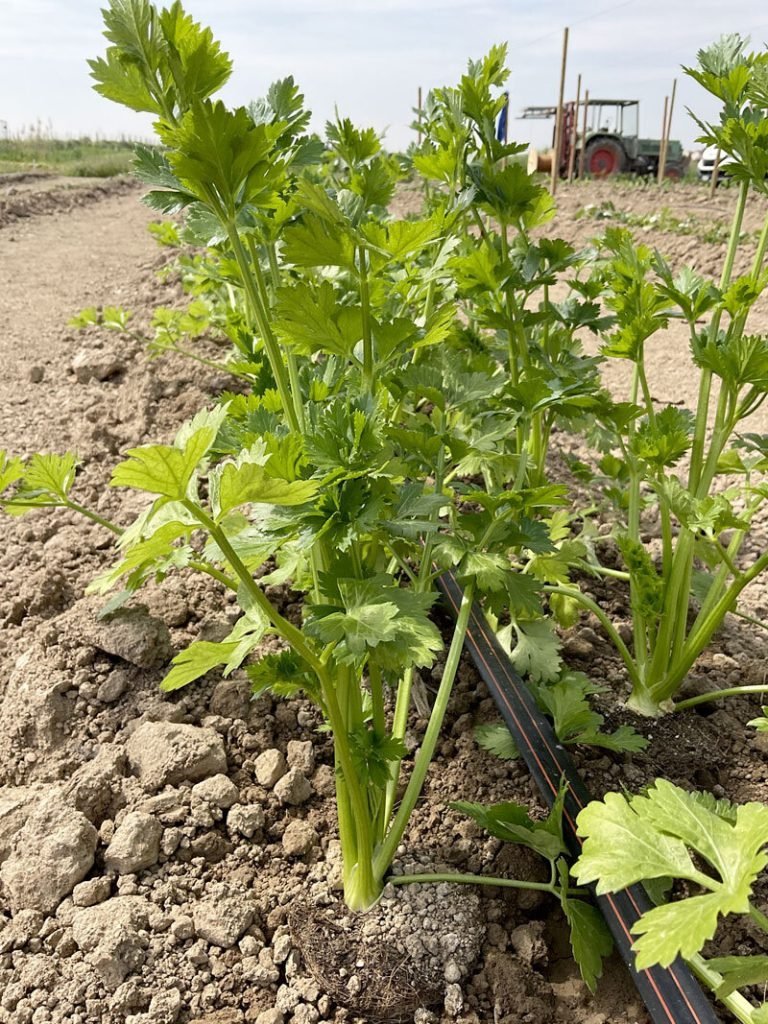
A cultivated herbaceous plant, depending on the variety, grown for its head or root, used in cooking to flavour traditional dishes or as a side vegetable. Moderately hardy, it prefers a cool climate and well-drained soil.
At the time of transplanting, ensure the root ball does not dry out and immediately afterwards carry out localised watering. Subsequent watering should take place in the morning so that the leaves are dry before evening; this is also important in terms of protecting the young plant against potential pathogens. Transplant young seedlings with a maximum of 5 or 6 true leaves into a raised bed, leaving the root ball at least 2/5 mm above the soil surface.
In the post-transplanting phase, it is important to use a complete, specific starter fertiliser with a high phosphorus content to promote optimal root establishment.
These are some of the vegetable species that can be transplanted in May. Provided we pay attention to the specific minimum temperatures required for each plant, we can also plant asparagus (Asparagus officinalis), swiss chard (Beta vulgaris), chicory (Cichorium intybus), tarragon (Artemisia dracunculus), chilli peppers (Capsicum annuum), leeks (Allium porrum) and sage (Salvia officinalis).
Let’s also remember that, in suitable pots or containers, we can even grow some vegetable varieties on the terrace!